A managing partner at a mid-size litigation firm faces a familiar problem. A new matter requires privilege review on 12,000 documents from a corporate client's document management system. The options:
Manual review. Three associates. Six weeks. $180,000 in billable hours. The client pushes back on the invoice. The associates burn out. Half the documents get a 30-second skim.
Cloud AI. The ethics committee rejected it eight months ago. Model Rule 1.6(c) requires reasonable efforts to prevent unauthorized disclosure. Uploading client files to shared cloud infrastructure operated by a company in San Francisco does not qualify as reasonable.
Dhakma Core. One associate. Ten days. Every document classified, privilege-tagged, and linked to source material. First-pass review time cut by 80 percent. Total project time cut in half. The data never left the building.

The bottleneck your firm cannot solve with headcount
Legal work is document work. Discovery, due diligence, contract review, precedent research, deposition preparation. Associates at AmLaw 200 firms spend 60 to 70 percent of their time reviewing documents. That number has not changed in a decade.
The technology to accelerate this work exists. Large language models can classify documents, extract obligations, surface relevant case law, and draft research memos. Every firm knows this.
The problem is access.
Most firms have banned cloud AI tools outright or restricted them to non-client work. The ABA Standing Committee on Ethics and Professional Responsibility has not issued formal guidance approving cloud AI for privileged materials. State bar associations from California to New York have issued advisories urging caution. Ethics committees at individual firms have drawn the only defensible line: if the data leaves the building, the tool is off limits.
This creates an absurd situation. The technology that could make your associates 10x more productive is sitting behind a wall your ethics committee built for good reason.
Dhakma Core removes the wall.
What private AI changes in your daily practice
Dhakma Core is a private AI server that runs entirely on your hardware, in your building, on your network. No cloud connection. No third-party data processing. The models run locally. An on-premise document intelligence engine indexes your firm's files, case records, and knowledge base without sending a single byte off-site.
Here is what that means for the work your associates do every day.
Privilege review and document classification
Before: Associates manually review documents for privilege, work product, and responsiveness tags. A 10,000-document production takes three to four weeks with two associates working full days. Fatigue sets in by day three. Consistency drops. Missed privileged documents become clawback nightmares.
With Dhakma Core: The system classifies documents by privilege category, flags attorney-client communications, identifies work product, and tags responsive documents. An associate reviews the AI's classifications and handles edge cases. First-pass review time drops by 80 percent. Total project timeline: cut in half. Classification consistency stays above 95 percent across the entire corpus because the model does not get tired at 4 PM on a Thursday.
Case law research and precedent analysis
Before: An associate spends six to eight hours on a research memo. They search Westlaw, read headnotes, pull cases, and check that every citation is still good law. The partner reviews it and sends it back with questions about a circuit split the associate missed.
With Dhakma Core: The associate queries the system with the legal question. It returns relevant authority with pinpoint citations: reporter, volume, and page number. It identifies circuit splits, flags overruled precedent, and surfaces persuasive authority from analogous jurisdictions. The associate verifies citations and drafts the memo. Time: two hours. The partner does not send it back.
Contract due diligence
Before: During an acquisition, the associate team reviews 400 contracts from the target company's data room. They build a spreadsheet tracking termination clauses, change-of-control provisions, assignment restrictions, renewal triggers, and indemnification caps. It takes two weeks and the spreadsheet has errors.
With Dhakma Core: The system ingests the data room contents, extracts key provisions across all 400 contracts, and generates a structured obligations matrix. It flags unusual clauses, identifies missing standard provisions, and cross-references related agreements. The associate reviews and validates the output. Time: three days.
Deposition preparation
Before: A partner preparing for a key deposition re-reads 2,000 pages of prior testimony, exhibit binders, and interrogatory responses. They build an outline by hand, cross-referencing inconsistencies between the deponent's prior statements and documentary evidence. It takes a full week of preparation for a two-day deposition.
With Dhakma Core: The partner queries the system against the deponent's complete testimony history and all related exhibits. The system identifies contradictions between prior statements, flags testimony that conflicts with documentary evidence, and surfaces impeachment material organized by topic. Preparation time: two days. The cross-examination outline is built on evidence, not memory.
Brief drafting support
Before: A senior associate drafts a summary judgment motion. Research takes two days. Writing takes three. Cite-checking takes one. The partner edits for another day. Total: seven business days from assignment to filed brief.
With Dhakma Core: The associate uses the system to generate cite-checked research memos on each legal issue, complete with relevant authority and parenthetical descriptions. The system drafts argument sections with proper citation format. The associate refines the analysis and the partner reviews a polished product. Total: three business days.

The ethics argument is settled
Three rules govern your analysis.
ABA Model Rule 1.6(c) requires lawyers to make "reasonable efforts to prevent the inadvertent or unauthorized disclosure of, or unauthorized access to, information relating to the representation of a client."
Running client data through cloud infrastructure operated by a third party, processed on shared hardware, transmitted across public networks, and stored in data centers you have never visited does not satisfy "reasonable efforts." Even vendors offering "private cloud" or "dedicated instance" deployments still run on infrastructure outside your direct physical control, subject to third-party subpoenas, data residency risks, and administrative access by the vendor's operations team. The reasonable efforts standard requires more than a marketing label.
ABA Formal Opinion 477R (2017) addresses the duty to protect client information when using technology. The opinion states that lawyers must understand how their technology works, where data is stored, and who can access it. The opinion explicitly requires lawyers to assess whether their technology providers offer adequate security.
Dhakma Core runs on hardware you own. The data is stored on drives in your server room. Access is controlled by your network team. The physical air-gap switch disconnects the unit from all external networks at the hardware level. No remote exploit can bridge a physical disconnect. This is not a compliance argument. It is a compliance answer.
Model Rule 1.1, Comment 8 establishes the duty of technological competence: lawyers must "keep abreast of changes in the law and its practice, including the benefits and risks associated with relevant technology."
Comment 8 cuts both ways. It requires you to understand the risks of cloud AI. It also requires you to understand the benefits of private AI. Failing to adopt technology that makes your practice more effective, more accurate, and more competitive is itself a competence issue.
Private AI satisfies all three obligations. Cloud AI fails all three.
The math your CFO needs to see
The investment case has three layers.
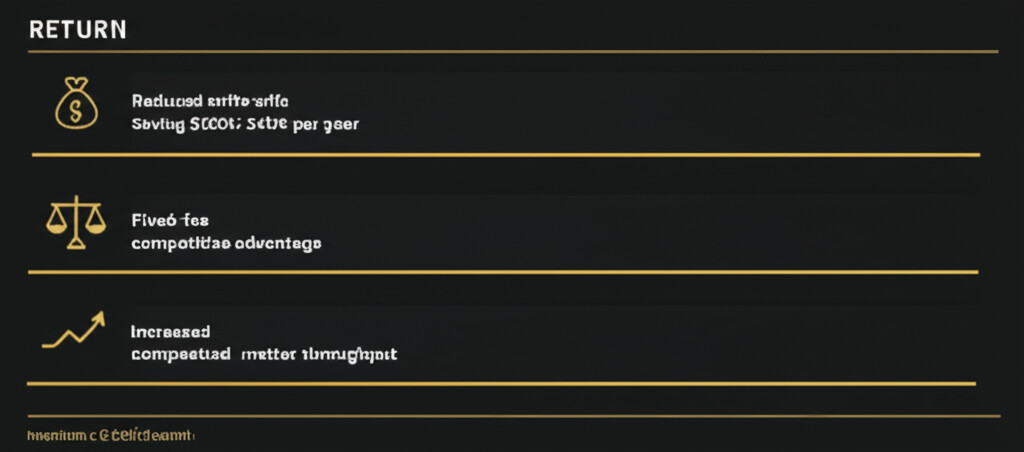
Layer 1: Reduced write-offs. Every litigation firm writes off discovery costs. Clients push back on six-figure document review invoices. A typical mid-size firm writes off $30,000 to $60,000 per quarter on discovery-related billing alone. Dhakma Core cuts review timelines in half, which means the invoices are smaller, clients pay them, and the write-off line shrinks. That is $120,000 to $240,000 per year in recovered revenue from work you were already doing.
Layer 2: Fixed-fee competitiveness. Clients increasingly demand alternative fee arrangements. The firm that can confidently bid a fixed fee on a privilege review and still make margin wins the work. Dhakma Core gives you the cost predictability to offer AFAs without eating the profit. Every fixed-fee engagement you win because your competitors cannot match your turnaround is incremental revenue.
Layer 3: Increased throughput. Faster matters mean more matters. If your associates finish privilege review in two weeks instead of five, they are available for the next engagement three weeks sooner. Over a year, that is two to three additional matters per associate. At $150,000 to $250,000 per matter, the capacity gain compounds.
The baseline investment: Dhakma Core runs approximately $5,000 per month fully loaded, including hardware amortization, software licensing, and quarterly on-site support. Against even the most conservative estimate of recovered write-offs alone, the system pays for itself in the first quarter.
How deployment works
The process is designed for organizations where security review is not optional.
Week 1: Installation and configuration. A Dhakma engineer arrives on-site with your configured Core unit. The hardware is installed in your server room. Your IT team connects it to the internal network. The air-gap switch is tested. No data touches the public internet.
Week 2: Document ingestion and indexing. Your existing document repositories, case management system exports, knowledge base files, and template libraries are ingested and indexed on your hardware. The system learns your firm's institutional knowledge. Nothing leaves the building.
Week 3: Training and workflow integration. Associates and paralegals learn the secure internal interface. Your practice group leaders define workflow templates for privilege review, research, contract analysis, and brief support. The system adapts to your firm's terminology and practice patterns.
Week 4: Production use. The system is live. Associates query documents, generate research memos, and classify privilege sets through a portal accessible only on your internal network. The model improves as it processes more of your firm's work.
Ongoing: Quarterly on-site reviews. Model updates deployed directly to your hardware. No cloud dependency at any point in the lifecycle.
See it on your own data first
We do not ask firms to commit before they see results. Dhakma offers a proof-of-concept deployment on a closed matter of your choosing. Your documents. Your hardware. Your associates evaluating the output.
Pick a completed privilege review, a past research project, or a closed due diligence file. We deploy a Core unit on-site, run your data through the system, and let your litigation support team compare the results against the original work product. No commitment beyond the pilot. No data leaves your building during or after the evaluation.
If the results do not speak for themselves, we take the hardware home.
Your competitors are already looking at this
The firms that deploy private AI first will set the standard for document review speed, research quality, and client service in their markets. They will win competitive pitches on turnaround time. They will retain associates who would otherwise burn out on manual review. They will bill more effectively because their work product is better.
The firms that wait will explain to clients why their privilege review takes six weeks when the firm down the street finishes in four days.
The question is not whether your firm will adopt AI. It is whether you will adopt it on infrastructure you control, or on infrastructure that controls you.